Map the boundary and the surface
- Is the line continuous or broken around dock doors, hydrants, and emergency paths?
- Does the surface shift between polished concrete, pavers, asphalt, and compacted soil?
- Will the line run near building faces that can create gusty conditions?
On resort properties, short panel runs and low-profile bases help preserve egress and keep trip points down. In industrial yards, longer runs with heavier bases control large work zones and laydown areas.
Local conditions that change the comparison
Wind can surge between tall structures and across open lots. Panel height, base weight, and spacing are set against expected exposure; actual site conditions, the specific system’s instructions, and site procedures govern stability requirements. Heat and dry dust also matter—bases and connectors should tolerate high surface temperatures and stay free of debris that can loosen connections.
Choosing panels and barricades
- Barricades for queues and event perimeters: Low, interlocking sections steer foot traffic without blocking sightlines.
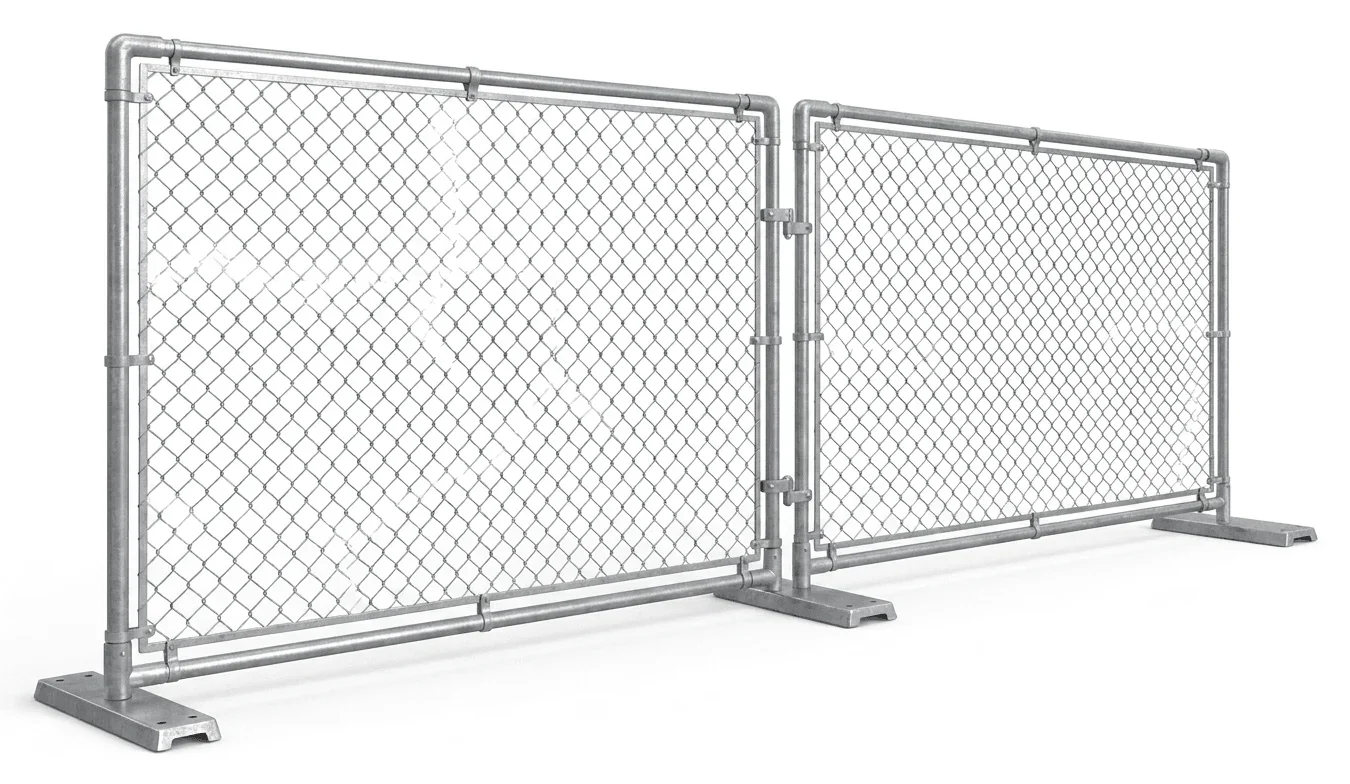
- Fence panels for active work edges: Taller sections mark no-go zones around aerial work, cranes, or staging areas.
- Gate placement: Plan gates where forklifts or carts naturally pass, reducing panel movement during the shift.
Transport and access
Service corridors in resorts have tight turns and quiet-hours movement. Compact stacks and non-marking transport wheels reduce disruption. For industrial sites, forklifts can shuttle bundles directly from containers to the fence line. See /forklift-rental/ for yard moves.
Integration with aerial work
When fencing off aerial lift areas near guest paths, keep clear offsets for lift swing and ground-level spotting. Compare lift types based on reach and surface: - Interior atriums and ballrooms: /electric-scissor-lift-rental/ - Exterior uneven ground: /rough-terrain-scissor-lift-rental/ - Reach over landscaping or signage: /articulating-boom-lift-rental/
Details to confirm before calling
- Total linear footage and the number of breaks for gates
- Surface types and any slope along the run
- Expected wind exposure near façades or open yards
- Delivery route constraints: dock dimensions, elevator access, and quiet-hour windows