Job geometry outdoors
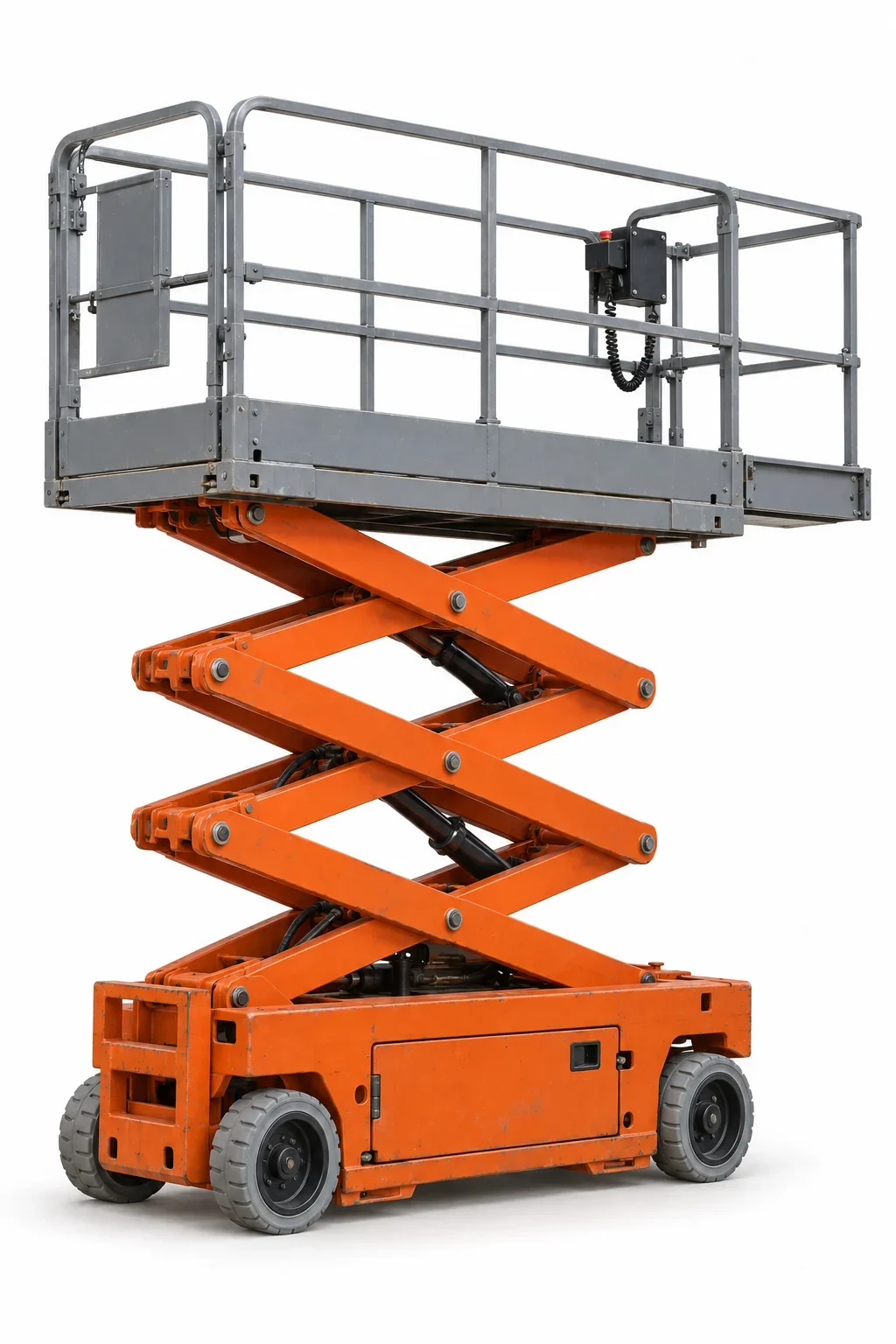
Start with whether the platform can sit directly beneath the task or work along a façade. Scissor lifts provide vertical reach and wide decks for crews and supplies. If steel, utilities, or signage require an up-and-over path around obstacles, compare booms at /boom-lift-rental/.
Surface and approach
Unfinished sites bring ruts, aggregate, and soft spots. Tire type, wheelbase, and ground clearance influence stability and progress between work areas. Check the approach grade from staging to the façade or lighting row; steep transitions can exceed a unit’s rated incline even if the work zone itself is level.
Wind considerations in the Las Vegas Valley
Gusts are common on open pads and between tall structures. Outdoor work is governed by the machine’s wind rating, site rules, and actual conditions at elevation. Wide-deck models offer productivity, but the larger sail area can increase wind sensitivity; the applicable rating determines acceptable exposure.
Heat and duty cycle
High temperatures can thin hydraulic fluid and tax cooling systems. Rough-terrain units suited for hot climates help maintain lift speed and control response during long shifts. Plan charging or fueling windows around mid-day peaks when possible within site procedures.
Typical local tasks
- Exterior sheathing, glazing prep, and façade utilities along new industrial shells
- Yard lighting, signage, and canopy work across paved and unpaved lots
- Mechanical and fire protection runs on elevated exteriors where a wide deck speeds installation
If the surface later transitions indoors, switch to an electric slab unit at /electric-scissor-lift-rental/ to protect finished floors.